 FOR KIDS
The Blackwater Deer Hunting Guide
How to decide a deer hunt, in the order it should be decided, with the rules for six states side by side.
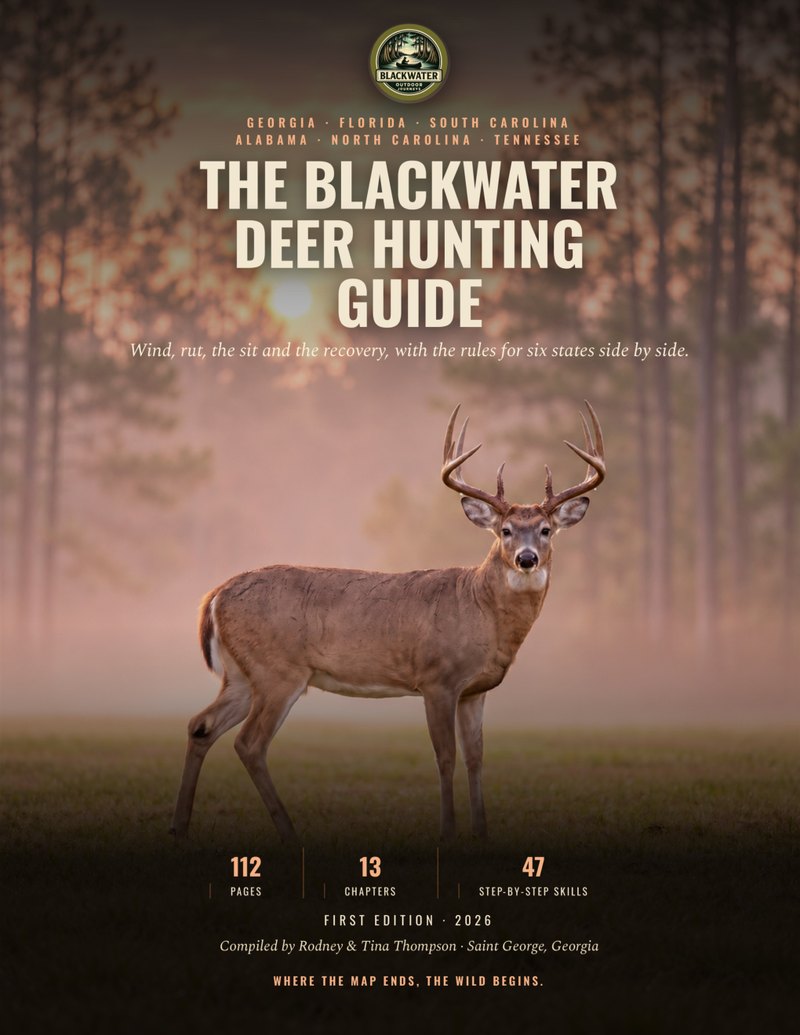
Six decisions sit behind every hunt: wind, rut, window, sit, log and recover. This book takes them in that order. Read the wind the way the forecast writes it, find your county’s rut window and know what it measures, pick the sit of the week, climb attached, log every sit, and know what you will do after the shot before you raise the gun. Where the law differs, each chapter lays Georgia, Florida, South Carolina, Alabama, North Carolina and Tennessee side by side, read from each state’s own agency and law, and every chapter shows the same skill in the Hockline app.
- 12 chapters, from how a hunt gets decided to hunting with your crew, plus field cards
- State tables for seasons, legal light, hunter orange, electronic calls, baiting, tracking dogs, reporting and CWD rules
- How each state measures and publishes its rut dates
- Step-by-step skills with what done right looks like, and a safety box where it matters
- Every rule, number and safety step names its source: 132 sources listed in the back
- An In Hockline panel in every chapter: the same skill in the app, Free or Premium
Read it free online
The first 6 pages open right here. One email opens the whole guide, and the same email opens every other Blackwater guide too.
What is inside: 12 chapters and the field cards
The book takes the six decisions behind every hunt in the order they should be made. Where the law differs, each chapter lays Georgia, Florida, South Carolina, Alabama, North Carolina and Tennessee side by side.
- Chapter 1: How a Hunt Gets Decided. Make the six decisions behind every sit in the right order, wind first and stand last, and know which ones are set by law before you ever leave the house.
- Chapter 2: Your Ground on the Map. Read satellite photos, lidar hillshade, slope and old aerials to find the benches, drains and old roadbeds worth walking, mark your sign so it means something in December, and know where the public land lines are in your state.
- Chapter 3: Stands and the Walk In. Place each stand for the winds it hunts best, plan a walk in that keeps your scent off the trail and the bedding, climb and haul safely, and follow your state’s stand rules on public land.
- Chapter 4: Wind, Thermals and Scent. Turn a wind forecast into the line your scent will travel, check the real air at the stand and on a slope, and use scent control for what it is: a help, never a replacement for the wind.
- Chapter 5: The Rut in Your County. Find your county’s published rut window, know what that date actually measures, read tarsal glands and scrapes for what they can and cannot tell you, and match each sit to the rut phase.
- Chapter 6: When to Sit. Work out legal shooting light for any stand in our six states, know the 2026-2027 season and Sunday rules where you hunt, and pick the best sit of the week from what the research actually supports.
- Chapter 7: Calling and Your Own Call Test. Know what deer sounds mean, rattle and call by rut phase within the law in your state, and run a fair test on your own ground that tells you whether calling helps there.
- Chapter 8: The Sit Log. Log a complete, honest record of every sit in Hockline in a few minutes, and read a season of those records for which stand, which wind and which time actually produce deer on your ground.
- Chapter 9: Safe in the Stand. You can check your harness before every sit, climb, sit and come down attached the whole time, keep your hands empty and the gun or bow unloaded on the haul line, know what to do if you are left hanging, wear the orange your state asks for, know the hunter education rule that covers you, and leave a return time someone will act on.
- Chapter 10: Shot Placement. You can handle the gun by the basic safety rules, identify the deer and what lies beyond it before any shot, name a deer’s angle before you shoot, take the angles that open the heart and lungs, pass the ones the sources say to pass, and know the distance you have actually proven.
- Chapter 11: After the Shot. You can mark where the deer stood and where it went, choose a wait from the source that matches your hit, read the blood, follow the trail without wrecking it, back out when the sign says to, and stay inside your state’s rules on recovery, reporting, limits and carcass movement.
- Chapter 12: Hunting With Your Crew. You can set up a club or lease so every member knows which stand is theirs and who is where, the sign everyone sees gets shared and kept, and the rules that go along with a new or young hunter are followed.
- Field Cards. You have three cards to photograph or cut out, a pre-sit checklist, a wind and access card and a recovery card, each one built from the chapters before it, and you log every sit in Hockline.
Hockline: the same skills in the app
Hockline is a deer hunting app with stand maps, the wind at every stand, county rut timing from state data, lidar, public land and a blood trail tool. Every chapter of this book ends with an In Hockline panel that shows the same skill in the app, Free or Premium.
- Chapter 1, How a Hunt Gets Decided (Free, with the rut phase headline, the Black Hock meter and good-wind matches in Premium) Today’s Plan runs the same loop on one screen for your stand: legal shooting light, sunrise and sunset, the moon, movement windows, the hourly wind with the way your scent drifts, open seasons, solunar times and calling guidance.
- Chapter 2, Your Ground on the Map (Free, with offline maps in Premium) The Hockline map stacks Hybrid, Satellite, Topo and Road base maps with overlays you switch on and off, including lidar hillshade and slope, each with its own opacity slider, and 3D terrain.
- Chapter 3, Stands and the Walk In (Free for one stand, with unlimited stands and the Good wind or Wrong wind fit for each stand in Premium) Drop a stand pin by long-pressing the map, at your GPS location, or at the map center.
- Chapter 4, Wind, Thermals and Scent (Free, with the Good wind or Wrong wind verdict for each stand in Premium) The stand wind check gives the wind hour by hour at the stand for today and tomorrow, from the National Weather Service forecast.
- Chapter 5, The Rut in Your County (Free, with the rut forecast, rut tactics and Black Hock meter in Premium) The seven-day plan shows a county rut timing line for each day.
- Chapter 6, When to Sit (Free, with Good wind or Wrong wind for each stand in Premium) The seven-day plan shows each day’s legal light, county rut timing and best windows, and tags the best window of the week.
- Chapter 7, Calling and Your Own Call Test (Free, with My Patterns in Premium) Each day plan in the movement forecast comes with a calling plan, and the sit log records the calls you used: none, grunt, bleat or rattle.
- Chapter 8, The Sit Log (Free, with My Patterns in Premium) Log a sit keeps one record per sit: stand, start and end, the calls you used and your calling plan, and a row for each deer with sex, age class, approach direction, closest distance and how it responded.
- Chapter 9, Safe in the Stand (Free, with Live share in Premium) Open Safety and add a hunting buddy or family member as your emergency contact.
- Chapter 10, Shot Placement (Free) The shot placement guide shows broadside, quartering away, quartering to and the shots to pass around a deer drawing with the vitals marked, with separate notes for bow and rifle and a source on every line.
- Chapter 11, After the Shot (Free) After the shot walks you through watching and listening, waiting, tracking the sign, when to back out, what blood can and cannot tell you, and law and access.
- Chapter 12, Hunting With Your Crew (Free) Draw your lease or club boundary as a hunt area by tapping points on the map, then invite members.
Hockline is on Android from Google Play, and runs in the browser on any phone or computer.
Common questions
In what order should you decide a deer hunt?
Wind first, stand last. If the wind is wrong for a stand today, that stand is off the list. Chapter 1, How a Hunt Gets Decided, shows how to make the six decisions behind every sit in the right order, wind first and stand last, and know which ones are set by law before you ever leave the house.
How do you use maps and lidar to scout deer ground?
The map finds the place. The sign on the ground decides it. Chapter 2, Your Ground on the Map, shows how to read satellite photos, lidar hillshade, slope and old aerials to find the benches, drains and old roadbeds worth walking, mark your sign so it means something in December, and know where the public land lines are in your state.
How do you place a deer stand and plan the walk in?
Every stand has its winds and its walk in. If either one is wrong today, sit somewhere else. Chapter 3, Stands and the Walk In, shows how to place each stand for the winds it hunts best, plan a walk in that keeps your scent off the trail and the bedding, climb and haul safely, and follow your state’s stand rules on public land.
How do wind and thermals carry your scent to deer?
Wind from, scent to. Pick the stand by the wind, then check the real air when you get there. Chapter 4, Wind, Thermals and Scent, shows how to turn a wind forecast into the line your scent will travel, check the real air at the stand and on a slope, and use scent control for what it is: a help, never a replacement for the wind.
How do I find the rut dates for my county?
Know whether your map shows conception or movement, and hunt a window, not a day. Chapter 5, The Rut in Your County, shows how to find your county’s published rut window, know what that date actually measures, read tarsal glands and scrapes for what they can and cannot tell you, and match each sit to the rut phase.
When is the best time to sit in a deer stand?
Plan around the right wind, dawn and dusk, and the solunar times. When a solunar period lines up with first or last light on a good wind, be in the stand. Chapter 6, When to Sit, shows how to work out legal shooting light for any stand in our six states, know the 2026-2027 season and Sunday rules where you hunt, and pick the best sit of the week from what the research actually supports.
Can I use an electronic call for deer, and do hand calls work?
Never use an electronic call for deer. Test your hand calls against silence before you trust them. Chapter 7, Calling and Your Own Call Test, shows how to know what deer sounds mean, rattle and call by rut phase within the law in your state, and run a fair test on your own ground that tells you whether calling helps there.
Why keep a log of every deer stand sit?
Log every sit in Hockline, the empty ones most of all, and log the wind the way the forecast does: where it blows from. Chapter 8, The Sit Log, shows how to log a complete, honest record of every sit in Hockline in a few minutes, and read a season of those records for which stand, which wind and which time actually produce deer on your ground.
How do you stay safe in a tree stand?
Feet off the ground means the harness is on and you are attached. Chapter 9, Safe in the Stand, shows how to check your harness before every sit, climb, sit and come down attached the whole time, keep your hands empty and the gun or bow unloaded on the haul line, know what to do if you are left hanging, wear the orange your state asks for, know the hunter education rule that covers you, and leave a return time someone will act on.
What shot angles should you take on a deer?
No angle, no shot. Broadside on the heart and lungs is the shot you wait for. Chapter 10, Shot Placement, shows how to handle the gun by the basic safety rules, identify the deer and what lies beyond it before any shot, name a deer’s angle before you shoot, take the angles that open the heart and lungs, pass the ones the sources say to pass, and know the distance you have actually proven.
What should you do after you shoot a deer?
When the sign says the hit was poor, back out and wait. Never push a gut-shot deer. Chapter 11, After the Shot, shows how to mark where the deer stood and where it went, choose a wait from the source that matches your hit, read the blood, follow the trail without wrecking it, back out when the sign says to, and stay inside your state’s rules on recovery, reporting, limits and carcass movement.
How do you share stands in a hunting club or lease?
A stand with a name on it is taken. Nobody walks to it but the name. Chapter 12, Hunting With Your Crew, shows how to set up a club or lease so every member knows which stand is theirs and who is where, the sign everyone sees gets shared and kept, and the rules that go along with a new or young hunter are followed.
What is Hockline?
Hockline is a deer hunting app with stand maps, the wind at every stand, county rut timing from state data, lidar, public land and a blood trail tool. Every chapter of The Blackwater Deer Hunting Guide ends with an In Hockline panel that shows the same skill in the app. It is on Android from Google Play and runs in the browser at app.hockline.com.
Which states does The Blackwater Deer Hunting Guide cover?
Georgia, Florida, South Carolina, Alabama, North Carolina and Tennessee. Where the law differs, each chapter lays the six states side by side, read from each state's own agency and law.